
In this article, you'll learn about the three different types of modules: Informational, Dynamic Learning, and GapFinder. For more information on each one, check out:
Amplifire currently offers three unique module types:
Each module type can have an important role in your Amplifire learning suite.
Informational Modules
An informational module looks more like traditional online learning that you may be used to. While Amplifire's primary focus is question-based learning, we've expanded our lineup of module types to accommodate instances when static learning is necessary.
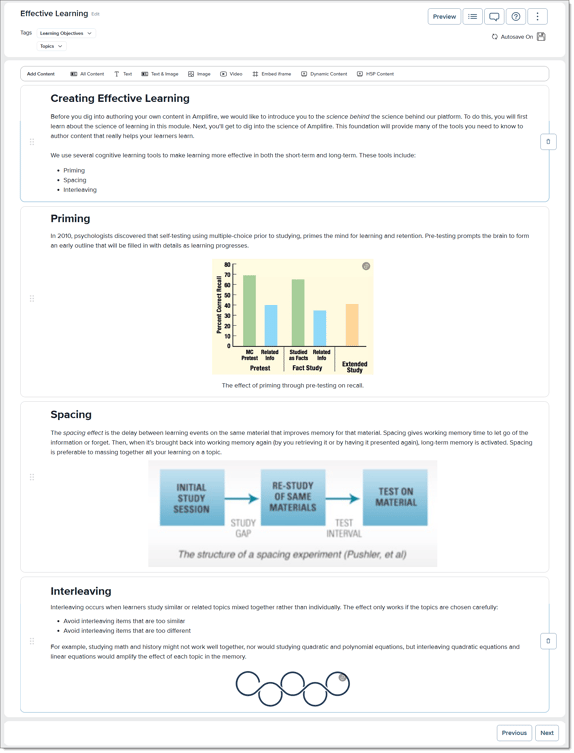
Informational modules are are stand-alone modules that are solely static and won't have any questions for the learner to answer to move on. An informational module can have multiple pages, and the content is purely educational. Unlike other module types, informational modules are easy to revisit once learning has concluded.
Dynamic Learning Modules
Dynamic Learning modules are Amplifire's bread an butter and have the same purpose as informational modules—-to teach, not test. Dynamic Learning modules are based on our patented adaptive learning algorithm and start by priming the learner through asking questions, and then providing learning in the form of the What You Need to Know explanation for those who did not know the materials. Learners will continue to answer questions until they confidently master all content.
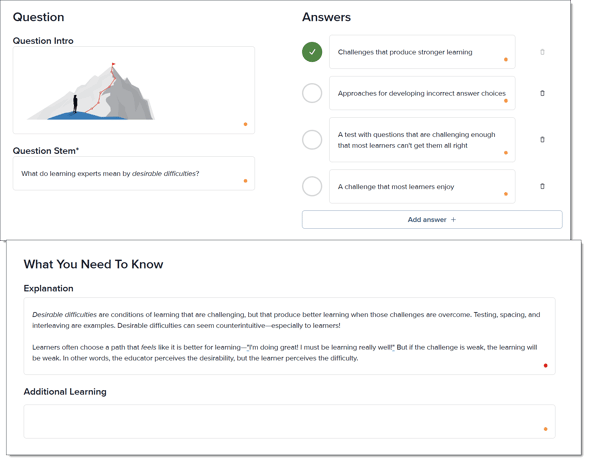
Dynamic Learning modules perform best if they are between 12 and 25 questions, and authors can mix multiple choice, multiple correct, and matching questions within a module. They can also include Shadow Questions and Chain Questions, and Question Chains can include an informational page.
For more information on the options available in Dynamic Learning modules, check out:
GapFinder Modules
A GapFinder module is closer to an assessment experience. Learners answer questions and submit their answers for scores. They can review the content to see how they performed after receiving their scores. GapFinders (aka Practice Tests) can stand alone or be part of a larger curriculum.
Consider them for:
- Review of previously covered material
- Assessment of starting knowledge
- Simulation of official certification tests
- Employee benchmark certification
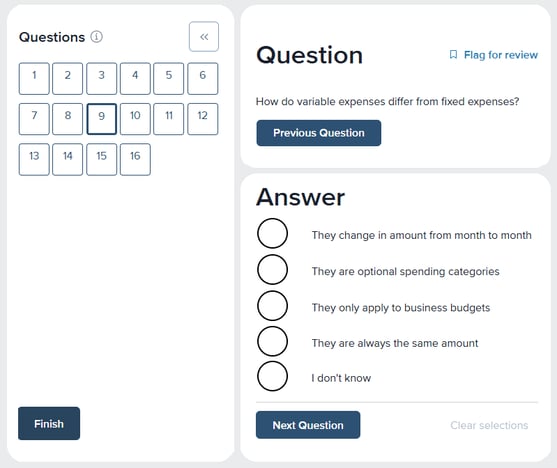
Learners have a navigation pane that allows them to skip around the questions. They can flag a question for later review or jump past a challenging question. As learners answer, the navigation updates. They can even submit their test before all the questions are answered (after acknowledging that some questions remain unanswered).
You can also configure the GapFinder module to recommend modules the user should complete to continue their training and education, based on the topics they struggled with.
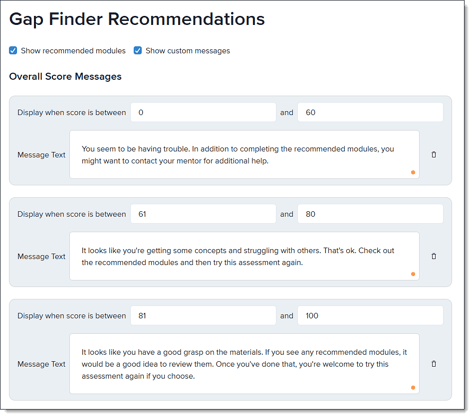
Users complete the modules and review their scores and questions. Then GapFinder can recommend modules that will help the user "fill in their knowledge gaps."